
Trading Ideas
Life Water MediaNews & Magazines
4.313.00 Reviews
- Version
- 1.8.9
- Installs
- 10.00K
- Age Rating
- Everyone
Screenshots
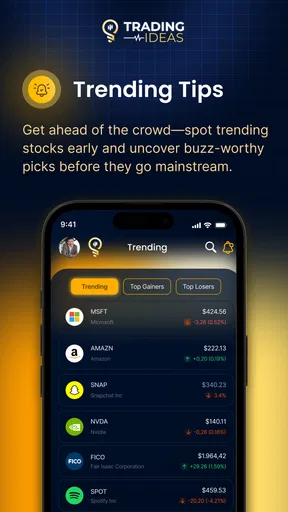
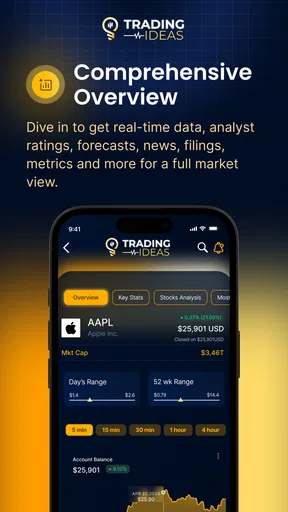

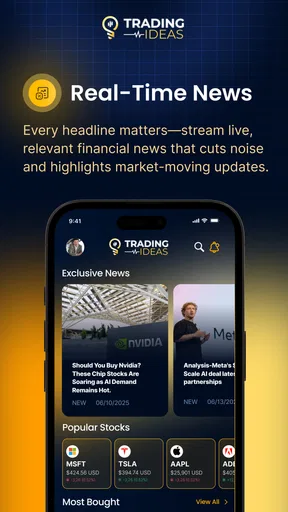
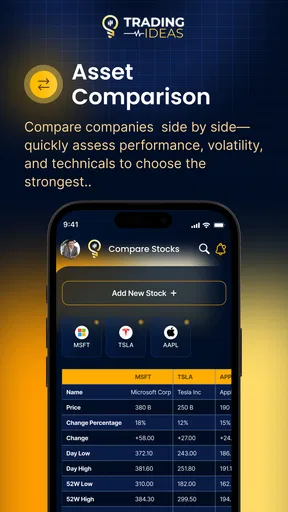
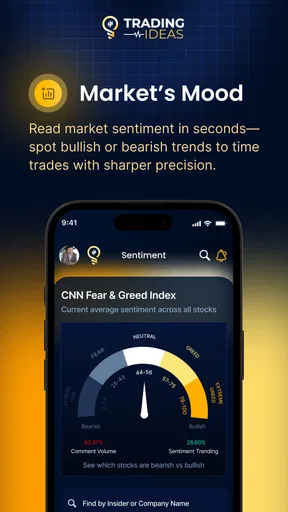
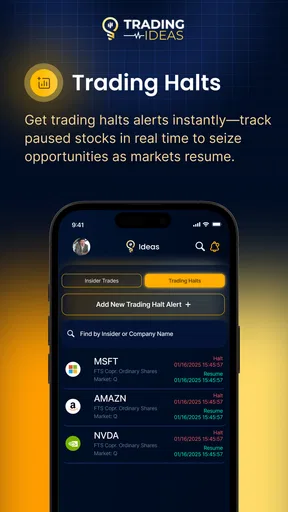
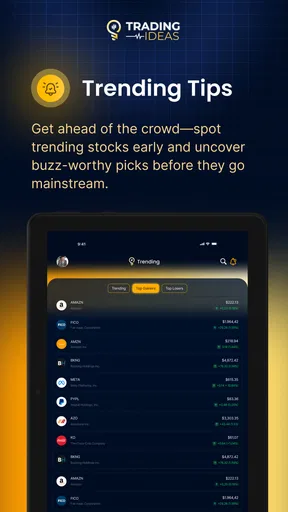
Our Review of Trading Ideas
 Analysis by Appyee
Trading Ideas is a focused news and magazines app from Life Water Media for people who want to follow market movement without beginning every morning with a pile of unrelated headlines. I found its appeal fairly easy to understand: it aims to put trading ideas, changing trends, market news, instant alerts, and deeper intelligence in one place. That makes it more useful as a market-watching companion than as a general news reader.
My overall view is positive, with an important qualification. Trading Ideas is best treated as a tool for finding and organizing market signals, not as a substitute for research or financial judgment. If you enjoy tracking what is moving and then doing your own homework, the app has a clear purpose. If you want a complete investing platform, a broad business newspaper, or direct trade execution, you will probably need something else alongside it.
How Trading Ideas fits into a daily market routine
I use Trading Ideas most effectively when I give it a defined place in my day rather than checking it whenever my phone lights up. A brief scan can help me decide which market themes deserve attention, while a later review gives me room to verify them without rushing. That routine also makes it easier to judge whether its alerts are genuinely useful or simply adding noise.
A compact starting point for market awareness
When I open a market-focused app, I want to answer a few practical questions quickly. What is attracting attention? Which themes are developing? Is there a piece of news that could change the way I look at a company or sector? Trading Ideas is built around that kind of first pass rather than leisurely reading.
The app’s category is News & Magazines, but its subject is much narrower than a typical newsstand application. The store’s short description, “Trading Ideas,” captures the intended use better than a broad label does. I see it as a stream for discovering possible areas to investigate, with market moves and trend information helping me decide where to spend my limited attention.
That distinction matters. A general news app may give me politics, culture, sports, technology, and business in one feed. Trading Ideas is more suitable when markets are already part of my routine and I do not want to filter away everything unrelated. Its value comes from focus, not variety.
What stood out during regular use
The strongest part of the experience is the combination of timely information and a more interpretive angle. Market moves tell me what is happening, while trend coverage and deeper intelligence are intended to help me think about why it may matter. Those are different jobs, and keeping them together can make the first stage of research less scattered.
I also like the idea of instant alerts for users who follow markets during the day. An alert can be useful when I am away from a screen and need to know that something deserves a closer look. The sensible workflow is not to react immediately, but to use the notification as a bookmark: open the relevant item later, check the underlying facts, and decide whether it changes my watchlist or simply reflects short-term noise.
That is one of the app’s less obvious strengths. Alerts are not only about speed; they can reduce the habit of repeatedly refreshing several sources. Used carefully, Trading Ideas can act as a filter between the wider market and my own research process.
Useful ways to work with the information
I would not use the app by reading every item from top to bottom. A better approach is to divide a session into three passes. First, scan the market moves and headlines for subjects that genuinely affect the areas I follow. Second, open the items that connect with an existing question, such as whether a trend is broad or limited to one company. Third, record what needs verification elsewhere before making any decision.
This method keeps the app in its proper role. It is a discovery layer, not a final answer. The deeper-intelligence angle is most valuable when it helps me form a better question. For example, a trend may prompt me to compare several companies, check an earnings release, or look at a longer time frame instead of judging a situation from one sharp price movement.
Another practical use is preparing before the trading day becomes busy. I can review the subjects that appear important, identify two or three areas worth following, and then ignore less relevant alerts. That is more disciplined than allowing every notification to dictate my attention.
Where the app is especially convenient
Trading Ideas is free, which removes the biggest barrier to trying it. The age rating is Everyone, so its presentation is not positioned as an adults-only product. It runs on Android devices using version 8.0 or later, making it accessible to people who are not carrying the newest phone. The current version is 1.8.9, and the app was released on August 15, 2025.
Those details make it a straightforward option for a spare device, an older phone, or someone who wants to test a market-news workflow without committing money first. I would still judge it by the quality and usefulness of the information rather than by the lack of a price tag. Free access is convenient, but it does not remove the need to verify important claims.
Its early reach is modest but meaningful: the app has passed ten thousand installs, while its average rating is 4.3 from roughly forty ratings. I read that as encouraging rather than conclusive. There is enough user response to suggest that the concept works for some people, but not enough to treat the rating as a complete picture of long-term reliability.
A realistic everyday example
Imagine I have a busy workday and follow a handful of market themes. Before leaving home, I use Trading Ideas to see which moves and trends deserve attention. An alert arrives during lunch, but instead of buying or selling from the notification, I open the related information, note the claim, and compare it with a primary company announcement or another trusted source. In the evening, I review whether the item still matters after the initial excitement has faded.
That routine shows where the app can genuinely help. It shortens the path from “something is happening” to “I know what I should investigate.” It does not turn a rushed lunch break into sound financial analysis, and it should not be used that way. The app is useful when it improves the questions I ask, not when it encourages impulsive answers.
The main limitation: signals can feel more complete than they are
The same focused presentation that makes Trading Ideas convenient can also create a risk. A stream of market moves, alerts, and intelligence may give the impression that the important context is already in front of me. In reality, a market idea usually needs more work: source checking, time-frame analysis, valuation or financial review, and an understanding of the risks involved.
This is not a criticism of the app’s purpose so much as a warning about how I would use it. A headline can be accurate and still be insufficient. An alert can be timely and still be irrelevant to my goals. A trend can be visible and still be too crowded, too temporary, or too difficult to act on sensibly.
I would also be cautious about notification fatigue. Instant alerts are valuable when they are selective, but a constant stream can make every movement feel urgent. My advice is to disable or reduce anything that encourages compulsive checking, then keep only the alerts that support a defined watchlist or research habit. The app works better as a controlled signal source than as a permanent interruption.
Another trade-off is breadth. Someone who wants detailed coverage of world events, company profiles, long-form journalism, or a broad economic calendar may find the experience too specialized. A conventional business-news app is likely better for building background knowledge across industries. A dedicated brokerage or portfolio application is better for holdings, orders, account information, and execution. Trading Ideas occupies the space before those decisions: attention, discovery, and preliminary research.
Who should use it, and who should skip it
I would recommend Trading Ideas to new market followers who want a more focused way to learn what people are watching, provided they are willing to verify information independently. It can also suit experienced traders who already have a research process and want another source of ideas or timely prompts. The free price makes experimentation easy, and the narrow subject matter means less time spent clearing away unrelated stories.
It may be particularly handy for someone who keeps a written watchlist. I can use an item from the app as a prompt, add the company or theme to my notes, and revisit it after checking more authoritative material. That creates a useful separation between discovery and decision-making, which is healthier than treating a news item as an instruction.
I would skip it if my main goal is to place trades, manage a portfolio, or receive personalized financial advice. I would also choose a broader news service if I need extensive context about the economy and the wider world. Finally, people who know they react emotionally to alerts should be careful: the app’s speed-oriented appeal may work against them unless notifications are managed firmly.
What I would like users to understand before installing
The name suggests ideas, and that is exactly how I would interpret the product. It is not a promise that every item will become a profitable opportunity. The responsible way to use it is to treat each idea as a starting point with a short shelf life and an obligation to investigate.
Before relying on an alert, I would ask three questions. Is the information relevant to my time horizon? Can I confirm the important detail from a dependable source? What would prove that my first interpretation is wrong? Those questions take only a moment, but they prevent the app from becoming a shortcut around proper research.
I would also keep a simple record of which alerts led to useful research and which were distractions. After a week or two, that tells me whether the app is improving my process or merely increasing screen time. This is a more meaningful test than judging it by how busy or exciting the feed feels.
My final assessment
Trading Ideas succeeds when I use it as a focused market-news and idea-discovery companion. Its mix of market movement, trend awareness, alerts, and deeper intelligence gives it a clearer identity than a generic news reader. Life Water Media has aimed at a specific audience, and the app’s free access, Everyone rating, and support for Android 8.0 or later make it easy for that audience to try.
My recommendation is therefore conditional but clear. Install it if you want a compact way to notice market subjects and build a research queue. Keep another source available for confirmation, broader context, and primary information. Do not confuse speed with certainty, and do not let notifications make decisions on your behalf.
For a casual reader seeking general news, it is probably too narrow. For a disciplined market follower who wants fresh prompts without paying to test the idea, it is worth exploring. I see it as a useful first step in the research chain—valuable because it helps me decide where to look next, and limited because the most important judgment still has to come from me.
Verdict
Strengths of Trading Ideas
- Clear, practical trade setups with entry, target, and stop-loss ideas.
- Useful charts help users understand market trends and price movements.
- Ideas cover multiple assets, offering variety beyond traditional stocks.
- Community insights can reveal different strategies and market perspectives.
- Simple interface makes browsing and saving trading ideas convenient.
Limitations of Trading Ideas
- Trade ideas may become outdated quickly as market conditions change.
- Some setups require advanced market knowledge to evaluate properly.
- Following other users’ ideas can encourage impulsive trading decisions.
- The quality and accuracy of ideas can vary between contributors.
- Market data or premium features may require a paid subscription.
Similar Picks in This Category
View All
Google News - Daily Headlines
Google LLC4.0

X
X Corp.4.8

Flipboard:Your Social Magazine
Flipboard3.4

Opera News: breaking & local
Opera4.5

Hindi News by Dainik Bhaskar
Dainik Bhaskar Group4.0

Way2News Daily News App
Way2News ( Formerly Way2SMS )4.6
Frequently Asked Questions
What is Trading Ideas, and what can I use it for?
Trading Ideas is designed to help investors and traders discover, organize, and evaluate potential market opportunities. After exploring the app, I found that it focuses on presenting trade concepts, market observations, and analytical information in an accessible format. It can be useful for researching stocks and other assets, comparing ideas, and building a personal watchlist, but it should be treated as a research tool rather than a guaranteed source of profitable recommendations.
Is Trading Ideas suitable for beginners?
The app can be useful for beginners because it introduces market ideas in a more practical and visual way than many traditional financial platforms. However, new traders should still understand basic concepts such as risk, volatility, position sizing, stop-loss orders, and diversification before acting on anything they see. Some ideas may require prior knowledge to interpret correctly, so beginners should use the app for learning and research rather than copying trades blindly.
Does Trading Ideas provide real-time market data and alerts?
Trading Ideas may include market information, price movements, charts, notifications, or alerts depending on the supported assets, account type, and platform version. Users should check the app’s current listing and settings because data availability can vary by region and subscription plan. It is also important to remember that market prices can change quickly, and any displayed information may be delayed, so the app should not be relied on as the only source for time-sensitive decisions.
Can I place trades directly through Trading Ideas?
Trading Ideas is primarily intended for discovering and reviewing market opportunities, so users should not automatically assume that it functions as a complete brokerage platform. Whether direct trading is available depends on the app’s integrations, supported brokers, and current features. Before downloading or connecting an account, review the available trading options, fees, permissions, and supported markets. Always verify an idea independently and place orders only through a regulated service you trust.
Is Trading Ideas free to download, and are there in-app purchases?
The app may be free to download while offering optional premium features, subscriptions, or in-app purchases for expanded analysis, additional ideas, advanced tools, or fewer limitations. Pricing and included benefits can change over time, so users should read the store description and subscription terms before starting a trial. Check renewal conditions carefully, especially if payment is recurring, and avoid subscribing unless the extra features provide clear value for your personal trading approach.
